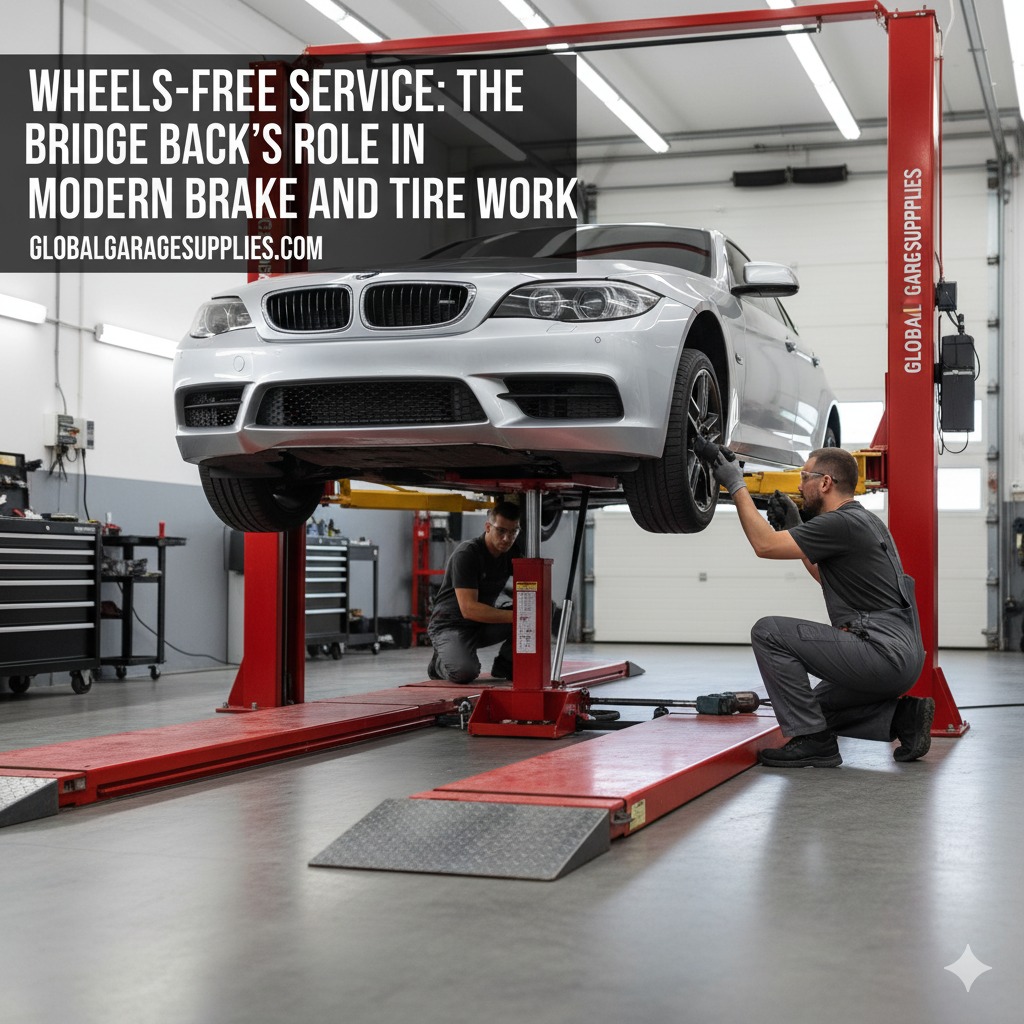
A Four Post Bridge Jack is a powerhouse of efficiency, converting your Four Post Lift into a full-service bay capable of wheels-free brake and suspension work. However, any piece of high-capacity, pressurized equipment demands unwavering respect and strict adherence to safety protocols.
Neglecting daily operational checks or routine maintenance on your bridge jack—a device that often carries a concentrated load of over 2,000 lbs—is the fastest path to equipment failure and a catastrophic safety hazard. At Global Garage Supplies, we prioritize the longevity of your equipment and the safety of your technicians.
Here is your essential checklist for maintaining a Safe Lift Zone around your bridge jack.
1. Daily Operational Safety Checklist (Before Use)
Safety starts before the first vehicle is lifted. Technicians must perform these quick visual and functional checks every day:
- Proper Positioning on Runways: Ensure the Four Post Bridge Jack is seated correctly on the lift’s runways. Check that the rollers or wheels are rolling smoothly and that the jack is not binding or scraping along the tracks.
- Secure Load Centering: Always lift the vehicle using the OEM-specified lifting points. The weight must be perfectly centered on the jack’s lifting pads to prevent the vehicle from shifting or tipping when lifted free of the runways.
- Check Safety Locks/Pins: Confirm that the jack’s safety locks (if equipped) are fully functional and ready to engage. Never attempt to lift a vehicle with damaged or missing locking pins.
- Fluid/Air Line Integrity: Perform a quick visual inspection for any hydraulic fluid leaks around the cylinder and hoses. If using an air-powered model, check the air line connection for secure fitting and signs of fraying.
2. The Absolute Necessity: Engaging Safety Locks
This rule is non-negotiable for all lifting equipment, especially the bridge jack: NEVER work beneath a load that is supported only by hydraulic pressure.
- Lift, Lock, Then Work: Always lift the vehicle slightly past the desired working height, then engage the safety lock mechanism on the bridge jack itself (if provided). The jack should then be lowered slowly until the weight of the vehicle is resting entirely on the mechanical lock, not the hydraulics.
- Avoid Shock Loading: Safety locks prevent a rapid descent in the event of a hydraulic leak or seal failure, protecting the technician and the vehicle from shock loading, which can cause structural damage.
3. Routine Maintenance Checklist (Monthly/Quarterly)
Because the Four Post Bridge Jack is a pressurized system, it requires more attention than a static accessory to ensure longevity and reliable performance:
- Hydraulic Fluid Inspection: Check the reservoir fluid level. Low or contaminated fluid is the leading cause of poor performance and seal wear. Top off or replace the fluid according to the manufacturer’s specifications.
- Cylinder and Seal Inspection: Look for small weep marks or persistent leaks around the main lift cylinder. Even small leaks indicate worn seals that need professional servicing.
- Lubrication: Lubricate the jack’s rollers, tracks, and internal moving parts according to the maintenance schedule. Smooth movement reduces wear on both the jack and the Four Post Lift runways.
- Calibration Check: Periodically verify that the jack’s maximum lift capacity sticker is clearly legible and matches the current working conditions.
Strict adherence to this checklist maximizes your equipment’s lifespan and drastically reduces your shop’s operational risk.
Ensure maximum safety—download our Bridge Jack maintenance guide and view our selection of durable Four Post Bridge Jacks at Global Garage Supplies.