A vehicle lift is a significant investment and a critical piece of equipment in any professional or serious home garage. Ensuring its longevity and, more importantly, the safety of everyone using it depends entirely on proactive, regular maintenance. Neglecting simple checks can lead to costly repairs, dangerous accidents, and unnecessary downtime.
At Global Garage Supplies (https://globalgaragesupplies.com/), we stress that proper inspection is the key to maximizing both the lifespan of your lift and the safety of your workspace.
Use this essential checklist, broken down into daily, weekly, and annual intervals, to keep your Car Lifts running safely and reliably for years.
Daily Checks: Before Every Shift
These quick inspections should be performed by the operator before the first use of the day and periodically throughout the shift.
- Listen for Unusual Noises: Pay close attention during raising and lowering. Any grinding, squealing, or scraping could indicate a misalignment or component failure. If you hear anything unusual, stop using the lift immediately.
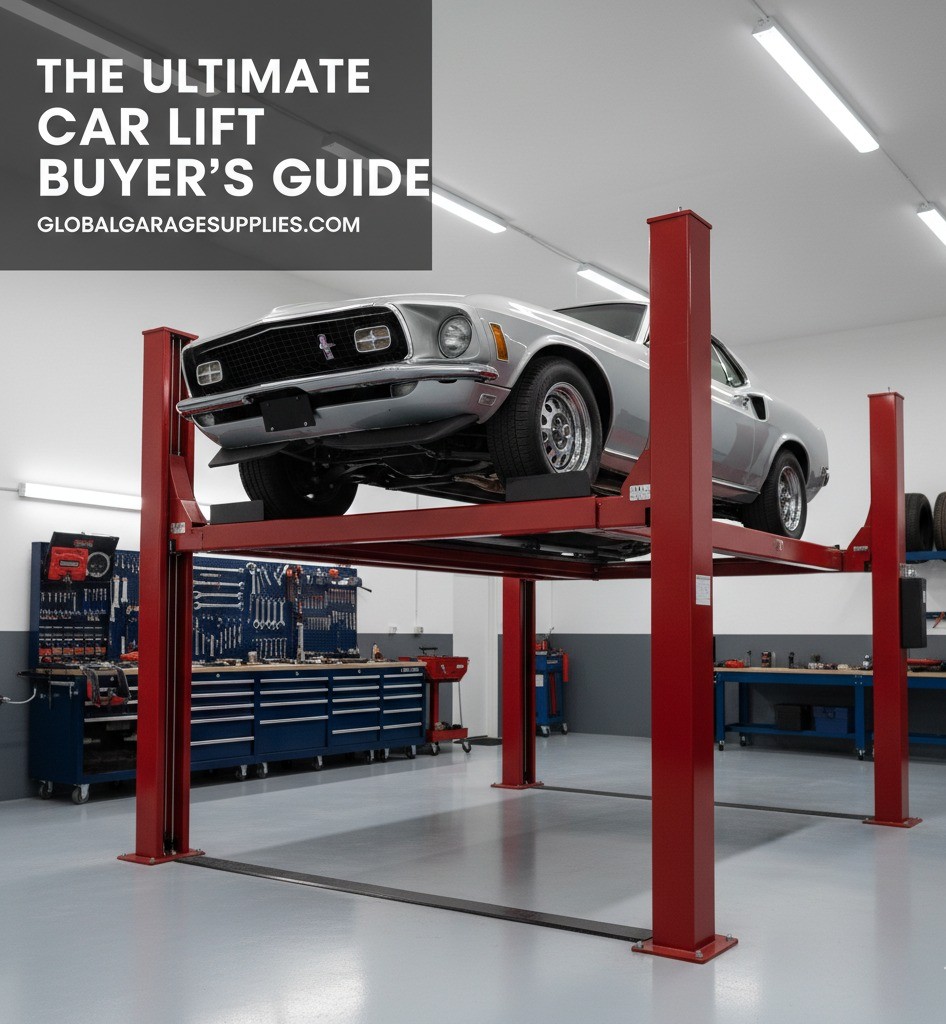
- Inspect the Approach/Area: Ensure the floor surrounding the lift is clear of tools, debris, and oil spills. The approach ramps and runways (on Four-Post Lifts) must be secure and clean.
- Check Fluid Levels: Inspect the hydraulic reservoir to ensure the oil is at the recommended level. Low fluid can damage the pump and cause jerky operation. Look for any signs of hydraulic leaks (puddles or drips).
- Function Test: Perform a brief cycle without a vehicle to confirm the lift raises smoothly and the safety locks engage automatically at the designated height.
Weekly/Monthly Checks: Detailed Component Inspection
These deeper checks require a bit more time but are crucial for catching wear and tear before it becomes hazardous.
- Inspect Lock Engagement Systems: This is arguably the most critical safety check. Raise the lift slightly past the desired height and then lower it onto the mechanical safety locks. Visually and audibly confirm that all locks on all posts engage fully and simultaneously. Never rely solely on the hydraulics when working beneath a vehicle.
- Cable/Chain Tension and Wear: Check the lift cables (especially on cable-driven Two-Post Lifts or four-post models) and chains for proper tension. Look closely for:
- Fraying or Broken Strands: Any visible damage requires immediate replacement.
- Rust or Corrosion: Excessive rust reduces strength.
- Lubrication: Ensure cables and chains are lubricated according to the manufacturer’s instructions.
- Anchor Bolts: Inspect the base of the lift columns where they are anchored to the concrete. Check that all anchor bolts are present and securely tightened. A loose anchor bolt is a severe safety hazard.
- Pads and Arms (on Two-Post Lifts): Inspect the rubber lift pads for excessive wear or tearing. Check the swing arms on a two-post model to ensure the arm restraints (which prevent the arms from shifting) are engaging properly.
Certification and Regulation: The Importance of Professional Inspections
While daily and monthly checks are essential user responsibilities, they do not replace professional inspections.
- Annual Professional Inspection: You must schedule a professional, certified lift inspector (e.g., ALI certified) to perform a thorough review of your equipment at least once a year. This expert can identify internal wear, structural fatigue, and component issues that are invisible during routine checks.
- Adherence to Standards (OSHA/Local Regs): Ensure your shop adheres to all Occupational Safety and Health Administration (OSHA) regulations and local safety codes pertaining to vehicle lifting equipment. This includes proper training for all operators and maintaining a record of all maintenance and inspection reports.
By implementing this comprehensive inspection routine, you protect your staff, your customers’ vehicles, and your investment in quality equipment from Global Garage Supplies. Safety is not an option—it is a requirement.